Faro Mine Remediation Project
Work underway to maintain and remediate the Faro Mine site.
On this page
History of Faro Mine
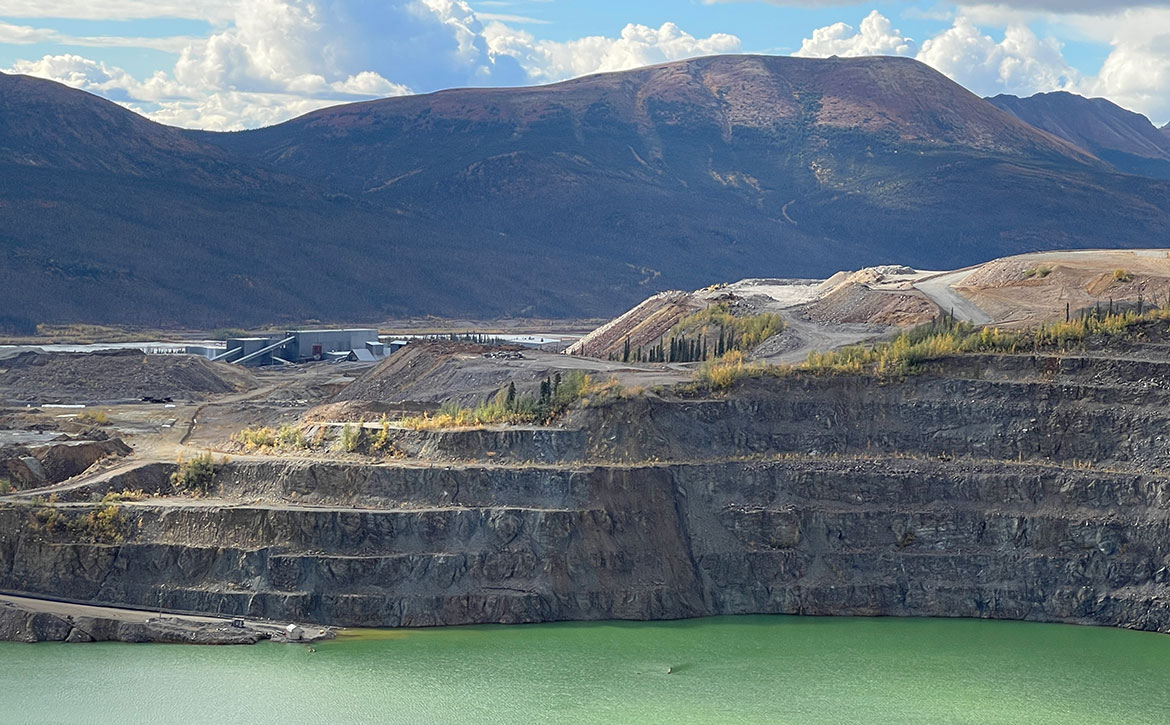
The Faro Mine was once the largest open pit lead-zinc mine in the world. The mine site spans 25 square kilometers, and is located in south-central Yukon, near the town of Faro, within the asserted traditional territory of Ross River Dena Council, Liard First Nation and Kaska communities located in British Columbia. It is also upstream from the traditional territory of Selkirk First Nation.
Processing the valuable minerals at the mine left behind 70 million tonnes of tailings and 320 million tonnes of waste rock. This waste leaches metals and acid into the surrounding land and water, contributing to ongoing contamination.
The mine was abandoned in 1998, leaving behind 2 key mine sites Faro and Vangorda, together comprising the Faro Mine Complex. Both sites are currently in a state of care and maintenance, which will continue until all remediation plans and regulatory requirements are in place to proceed with active remediation.
Responsible parties
The abandoned Faro Mine became a Type II Site under the Yukon Northern Affairs Program Devolution Transfer Agreement (Devolution Transfer Agreement) on April 1, 2003. Under this agreement, the Government of Canada, led by Crown-Indigenous Relations and Northern Affairs Canada, is responsible for pre-2003 environmental liabilities and associated costs of remediation for abandoned Type roman numeral 2 mine sites. Responsibility for addressing the site was to be shared between the Government of Canada and the Government of Yukon, working with the Affected First Nations.
In 2018, the governments of Canada and Yukon entered into a new agreement for the Government of Canada to assume all responsibility for remediation of the Faro Mine site, in addition to funding the work, which is currently done through the Northern Abandoned Mine Reclamation Program.
Today, the Affected First Nations engaged in the remediation of the Faro Mine site, known as Tsē Zūl in the Kaska language, include Kaska Nation communities on whose asserted traditional territory the mine site is located:
- Ross River Dena Council (Yukon)
- Liard First Nation (Yukon)
- Kaska communities located in British Columbia
And, one First Nation located downstream from the mine site:
- Selkirk First Nation (Yukon)
Consultation and engagement
1. Working in partnership with First Nations
A key aspect of the Faro Mine Remediation Project is on-going collaboration and community engagement with and consultation of Affected First Nations partners.
The Faro Mine Remediation Project team works with First Nations partners collectively through project governance bodies including a project Oversight Committee, Technical Review Committee and Independent Peer Review Panel. First Nations partners are also invited to participate in technical workshops, and each also works with the Government of Canada through bilateral working groups.
Through an ongoing and respectful dialogue, the Faro Mine Remediation Project team continues to foster collaborative partnerships with local First Nations, and ensures their feedback is incorporated into the project.
The project is also intended to provide a range of socio-economic benefits. Collaboration with First Nations partners has emphasized fostering opportunities for sustainable and longer-term development with lasting benefits to community members and business entities. The Faro Mine Remediation Project is critical in supporting reconciliation efforts with local First Nations.
2. Working with project stakeholders, regulators, and other interested parties
There is also on-going engagement with:
- project stakeholders such as the Town of Faro
- regulators including the Government of Yukon, Natural Resources Canada, and Fisheries and Oceans Canada
- other interested parties such as environmental and conservation groups
The Faro Mine Remediation Project team works to keep these groups informed and involved, ensuring their input is considered in the project.
3. Past consultations
First Nations partners, project stakeholders, regulators and other interested parties are invited as appropriate to participate in engagement and consultation events such as technical workshops, licensing application processes, and the Yukon Environment and Socio-economic Assessment process including the past consultations outlined below.
- Faro Mine Remediation Project Consultation: Phase 1
- Faro Mine Remediation Project Consultation: Phase 2
- What We Heard: Faro Mine Remediation Project, summer 2017 public consultation summary
For more information about past First Nations and community consultation, see Section 2 First Nations and Community Consultation of the Faro Mine Remediation Project Proposal (August 2019) on the Yukon Environment and Socio-economic Assessment Board Registry.
Faro Mine Remediation Project activities
The Faro Mine Remediation Project is one of the most complex abandoned mine clean-up projects in Canada. It was established to reduce, mitigate and prevent further contamination of nearby land and water by waste rock and tailings left behind by the former mining operation.
Currently, care and maintenance activities are underway to prevent site degradation and ensure the site remains stable and secure. This work reduces the risk that the site poses for human, wildlife and environmental health and safety, and includes:
- site and water quality monitoring
- collecting and treating contaminated water
- ensuring that water leaving the site meets environmental standards
- urgent works including maintaining site infrastructure such as roads, buildings, dams and stream channels
- consultation and engagement with:
- First Nations partners
- stakeholders, regulators and other interested parties
- remediation plan design
- regulatory processes and approvals
Ongoing environmental monitoring is being conducted to track risks and determine if conditions are changing. Where monitoring identifies environmental change is occurring, adaptive management (including putting new infrastructure in place) is undertaken to prevent changing conditions from further impacting the environment, or human and wildlife health and safety. Adaptive management measures undertaken by the project team to date include:
- collecting and treating contaminated water identified downstream of the tailings facility to protect Rose Creek, which began in 2019
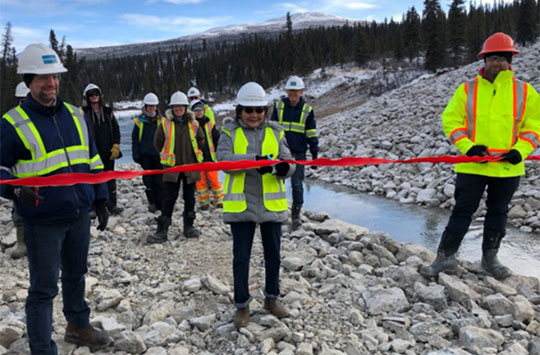
- realigning the North Fork of Rose Creek which was completed in 2020 to prevent the creek from coming into contact with contaminated water on site
- collecting and treating contaminated water from the former North Fork of Rose Creek starting in the spring of 2021, with capacity doubling in the spring of 2023
- collecting and treating contaminated water at the grum ore transfer pad to protect Vangorda Creek, which began in 2021
Care and maintenance of the site, including adaptive management, works to address the highest priority issues while the Faro Mine Remediation Plan proceeds through regulatory approvals.
The remediation plan
The Faro Mine Remediation Project team has prepared a plan to remediate the Faro Mine site.
In 2005, the project team, in collaboration with the Government of Yukon, Ross River Dena Council, Liard First Nation, Selkirk First Nation and other affected and interested groups, established 5 critical objectives for the remediation plan:
- protecting human health and safety
- protecting and, to the extent practicable, restoring the environment, including land, air, water, fish and wildlife
- maximizing local and Yukon socio-economic benefits
- managing long-term site risk in a cost-effective manner
- returning the mine site to an acceptable state of use that reflects pre-mine land use, where possible
After many years of research, extensive professional review and consultation, a remediation approach was selected in 2009. Key features of the selected ‘stabilize in place' remediation approach include:
- upgrading dams to ensure tailings stay in place
- re-shaping, covering, revegetating and establishing surface drainage on waste rock and tailings
- extending and upgrading diversion channels to keep clean water away from contamination
- improving and expanding contaminated water collection systems and building a new water treatment plant
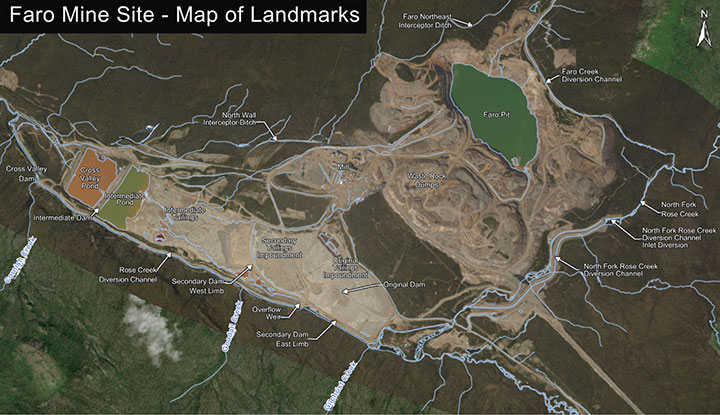
The Faro Mine Remediation Project Plan (Project# 2019-0149) was submitted to the Yukon Environmental and Socio-Economic Assessment Board (YESAB) for review in May of 2019 and is focused on the Faro mine site (map below). Future plans for the Vangorda mine site are still being determined.
A Final Screening Report and Recommendation was issued by the board's Executive Committee in November of 2024. It is being reviewed by Decision Bodies who are also engaging with First Nations partners regarding next steps. A decision is expected in 2025.
Progress to date
Key project milestones to date include:
- formation of the Faro Mine Remediation Project Oversight Committee by the governments of Canada and Yukon, Kaska First Nations and Selkirk First Nation to help develop the Faro Mine remediation plan (2003) including:
- establishment of the 5 remediation objectives (2005)
- selection and approval of a remediation approach (2009)
- the Government of Canada assumed the lead for all aspects of the Faro Mine Remediation Project (2018), in addition to funding the work
- the Government of Canada submitted the remediation plan to the Yukon Environmental and Socio-Economic Assessment Board to commence the review process (2019)
- construction of the new channel at the North Fork of Rose Creek was completed, helping to prevent contamination of Rose Creek and protecting its valuable fish habitat (2020)
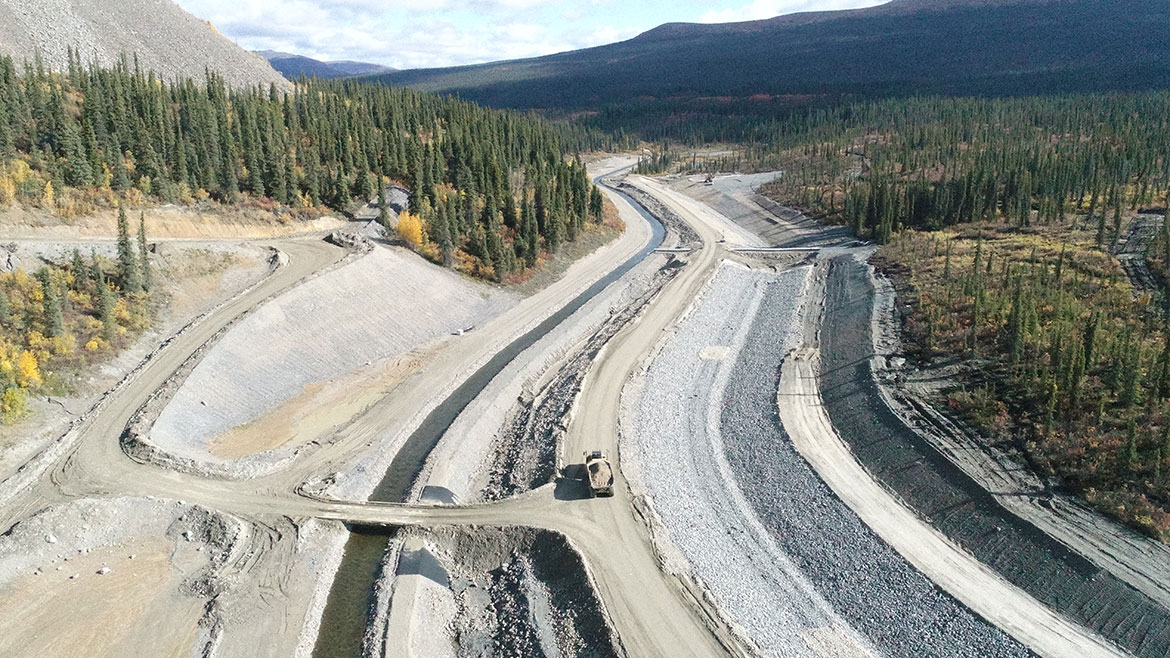
- Public Services and Procurement Canada began working on the project and, working with Crown-Indigenous Relations and Northern Affairs Canada, awarded a series of key contracts for various aspects of the project (2022)
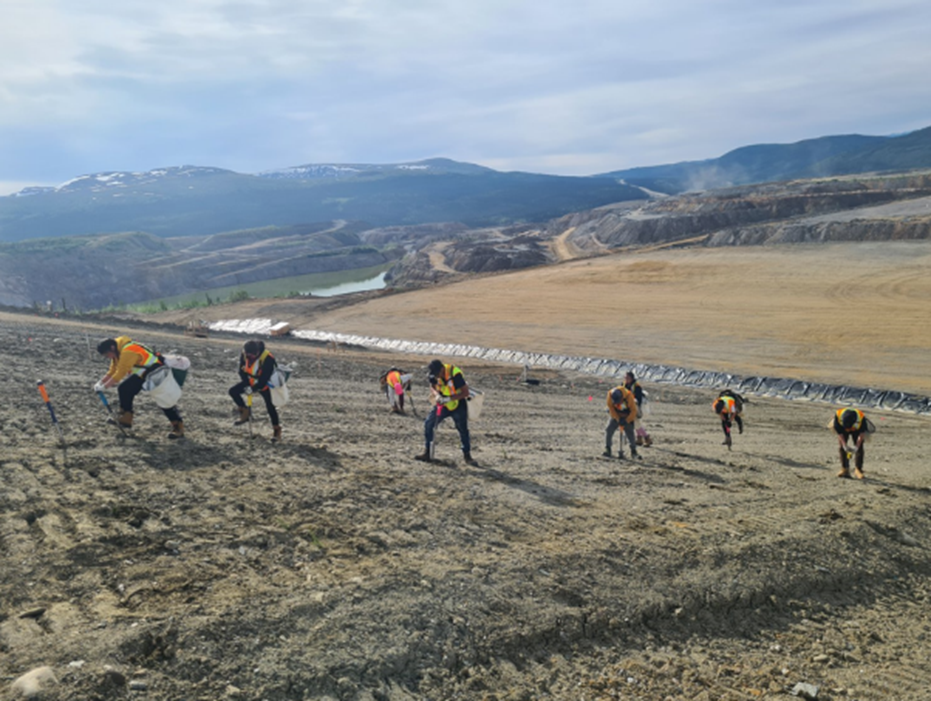
- Successes from the partnership between the Government of Canada and Ross River Dena Council include initiating the Tsē Zūl Land Care Plan, planting of 100,000 tree seedlings as part of the revegetation initiative, and having office trailers installed by the community's economic development arm, Dena Nezziddi Development Corporation (2024)
Timeline of events and progress to date:
2024
- received the Final Screening Report and Recommendation for the Faro Mine Remediation Plan from the Yukon Environmental and Socio-Economic Assessment Board's Executive Committee
- completed installation of a new lime slaker at the Vangorda water treatment plant and potable water systems for the security and guardhouse buildings
- improved water diversion at the North Fork of Rose Creek ancestral channel system and implemented the haul road bypass system to prevent freshet-related overtopping
- progressed on the main camp (Tsē Zūl Camp) to accommodate workers for long-term remediation
- tendered construction for Down Valley tailings relocation, tailings dust cover and fuel tank replacement
- installed office trailers through a partnership with Dena Nezziddi Development Corporation, the community economic development corporation owned by the Ross River Dena Council
- engaged with Ross River Dena Council through a project update and community dinner
- marked the planting of 100,000 tree seedlings as part of the revegetation initiative, and initiated the Tsē Zūl Land Care Plan in partnership with the Ross River Dena Council
2023
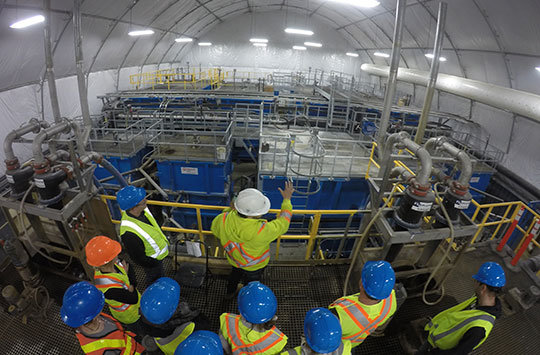
- completed pilot scale water treatment plant to evaluate treatment process
- completed early civil works for the construction of a new permanent water treatment plant, camp construction and relocation, and overhead electrical upgrades
- completed mitigation measures to address the bypass of the North Fork of Rose Creek contaminated water collection system including installing higher capacity pumps, additional infrastructure and equipment to create system redundancy and resiliency
- held public meetings in Yukon communities to share information about the status of the project's Water License engagement process
- completed upgrades to the Rose Creek Tailings Area Overflow weir and spillway
- completed hydroseeding of the intermediate dam for erosion control on the downstream side
2022
- Public Services and Procurement Canada began working with Crown-Indigenous Relation and Northern Affairs Canada to deliver the project, including:
- awarding contract to Parsons Inc. for Construction Management and Care and Maintenance Services
- awarding contract to Ensero Solutions Canada Inc. for Environmental Monitoring Services
- awarding contract to AECOM Canada Ltd. for the Remediation Plan Design and Support Services
- awarding contract to Golder Associates Ltd. (now WSP) for Regulatory Support Services.
- awarding standing offer to Tetra Tech Canada for Geotechnical Support Services
- held community engagement sessions with Ross River Dena Council on the design of the Permanent Water Treatment Plant
- Parsons Inc. opened the Faro Mine Remediation Project office in Whitehorse, and established its own project website
- completed phase 1 of the landform and revegetation pilot project
- completed short term Down Valley Seepage Interception System
2021
- started community-led revegetation strategy
- awarded contract to Jacobs Ltd. for the design of the Permanent Water Treatment Plant
- completed construction and began operating the Cross Valley Pond Water Treatment Plant
- completed construction and operation of the Grum Ore Transfer Pad seepage capture system
- completed construction of a haul road across the secondary tailings impoundment to support spillway construction and ongoing care and maintenance activities
- completed construction of a final landform on a section of the Northwest Waste Rock Dump as part a remedial planning pilot
2019
- completed engineering designs for the remediation plan to 30%
- submitted the Remediation Plan along with its environmental and socio-economic assessment to the Yukon Environmental and Socio-Economic Assessment Board to commence the review process
2018
- Government of Canada assumed responsibility for care and maintenance of the site from the Government of Yukon
- awarded contract to Parsons Inc. for interim construction manager
- started construction on North Fork of Rose Creek diversion
- constructed seepage capture system near monitoring station X13
2017
- initiated public consultation on key aspects of the environmental and socio-economic assessment process, potential effects and proposed mitigations required for site remediation with Affected First Nations, residents of Yukon and other stakeholders
2016
- hired contractors to work on regulatory applications and design plans for urgent works and remediation
2015
- completed construction and began operating a new interim water treatment plant
- installed seepage collection system at the North Fork of Rose Creek to reduce zinc levels in the water
2013
- closed old water treatment plant closed due to health and safety concerns
2011
- hired contractor to conduct research to help with remediation plan design
2010
- constructed grum sulphide cell with engineered covers to protect environment from contaminants
2009
- Government of Yukon assumed responsibility for care and maintenance of the site from the interim receiver
- remediation approach selected and approved by the Parties
2005
- remediation objectives selected by the Parties
2003
- the Yukon Northern Affairs Program Devolution Transfer Agreement (Devolution Transfer Agreement) took effect, and the Faro Mine was identified as a Type roman numeral 2 abandoned mine site
- oversight committee formed comprised of key Government of Canada, Government of Yukon, Kaska and Selkirk First Nation (the Parties) representatives to help develop the Faro Mine remediation plan
2002
- technical studies begin to better understand potential issues at the mine site, and consultation sessions start to gather input from Affected First Nations, the Town of Faro, subject-matter experts, governments and regulatory bodies
1998
- the Faro Mine was abandoned when the owner declared bankruptcy
- interim receiver appointed by the court to manage the environmental care and maintenance of the Faro Mine site
1969 to 1998
- active mining of lead and zinc took place intermittently
- for some time the mine was the largest open-pit lead-zinc mine in the world
- created contaminated waste rock and finely crushed particles known as tailings
- the Town of Faro was established alongside the start of active mining
1968
- excavation of the Faro Mine pit began
1953
- mining claim staked that would become the Faro Mine
Pre-1953
- Kaska people used the area known as Tsē Zūl for traditional activities, subsistence hunting and gathering
Consult the Parsons Inc. Faro Mine Remediation Project website for additional information and updates.
Next steps
After the completion of the Yukon Environmental and Socio-economic Assessment Board process (Project# 2019-0149), a water license application will be filed with the Yukon Water Board, and a Fisheries Act Authorization application will be submitted to Fisheries and Oceans Canada.
The Faro Mine Remediation Project's active remediation phase is expected to begin once all of the designs are complete and regulatory approvals are in place.
Remediation is expected to take about 15 years to complete, after which significant operation, monitoring and maintenance is planned for another 10 years.
After this period, these activities may be reduced, but will continue into the long term.
Some areas of the Faro Mine site will always remain under active management and monitoring.
Contracting and jobs
The majority of the work associated with the Faro Mine Remediation Project is being contracted by Parsons Inc., the Main Construction Manager.
Consult the Parsons Inc. Faro Mine remediation project website for information on contracting, job and related opportunities.
Features
Bringing Life Back to Tsē Zūl: Revegetation of the Faro Mine site

Each summer, Kaska Dena return to Tsē Zūl to plant locally sourced seedlings, restoring the land and strengthening cultural ties as part of the Community-Based Revegetation.
Reading the Creeks and Fish at Tsē Zūl (Faro Mine)
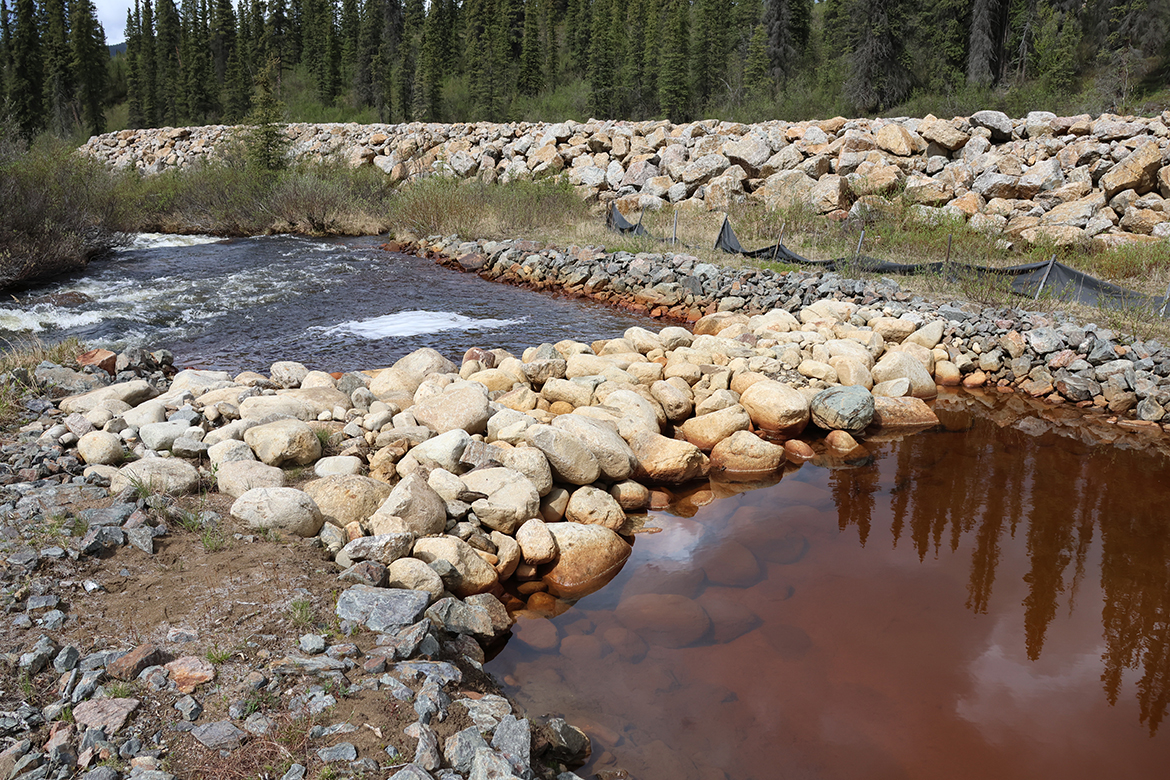
Water is central to the Faro Mine Remediation Project, with monitoring of water quality and aquatic life guiding decisions and showing progress.
Contact us
Faro Mine Remediation Project
415C-300 Main Street
Whitehorse, Yukon
Y1A 2B5
Phone: 1-800-661-0451
Email: faromine@rcaanc-cirnac.gc.ca