Reading the Creeks and Fish at Tsē Zūl (Faro Mine)
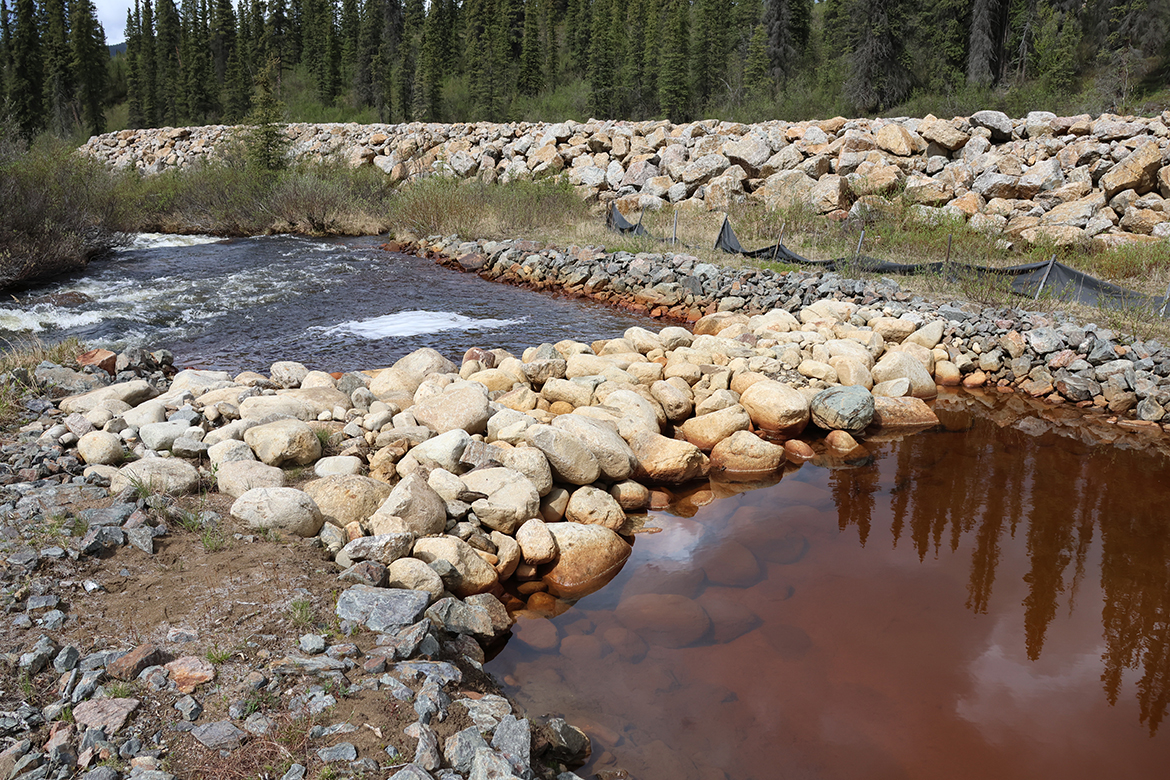
2 streams divided by rock: 1 carrying mine-impacted water, the other clean where fish can thrive.
Water plays a central role in the Tsē Zūl (Faro Mine) Remediation Project both as a potential pathway for contamination and as a key indicator of recovery. Across the site, monitoring tools and programs are in place to track water quality, all in an effort to protect the human and ecological populations, all people, plants, fish and wildlife in the environment, downstream of the site.
The project team carries out regular testing of surface water, groundwater, seepage, and contact water. In on-site labs, technicians analyze samples for a range of parameters that help assess the movement and treatment of mine-impacted water. Recent improvements to lab equipment are expected to speed up processing times for routine testing. Additional samples are sent for off-site laboratory testing by an independent company, to help ensure the results are reliable.
In the surrounding creeks, including Rose Creek, additional monitoring is carried out regularly to understand how fish, and other organisms living in and near the water are doing. Information is collected on which species are found in the creeks, how healthy they are if their presence or health is changing.
Together, the water chemistry and fish and organism monitoring results offer a broad view of how the aquatic environment at Faro is responding to ongoing remediation. These monitoring programs help inform future decisions and ensure that long-term environmental goals remain on track. Results from these programs are shared on-line through the Yukon Water Board reports and to Affected First Nations through the project’s governance structure.
Photo gallery


Scott Tomlinson, an Environmental Scientist with CIRNAC who oversees monitoring efforts for the Faro Mine Remediation Program, speaks with Milan Vincent and Clint Espanol, Ensero’s on-site lab technicians who test water quality at multiple locations across the Faro Mine site 7 days per week.
New lab equipment reduces water sample processing time.
WSP’s Amy Cardinal and Joe Marquardson tag Arctic grayling along Rose Creek to monitor aquatic life.
Trackers in Amy’s hand.
After tagging, Joe is returning the fish back to the creek.
Length and species data support long-term tracking of fish health.